

Description
The vineyard
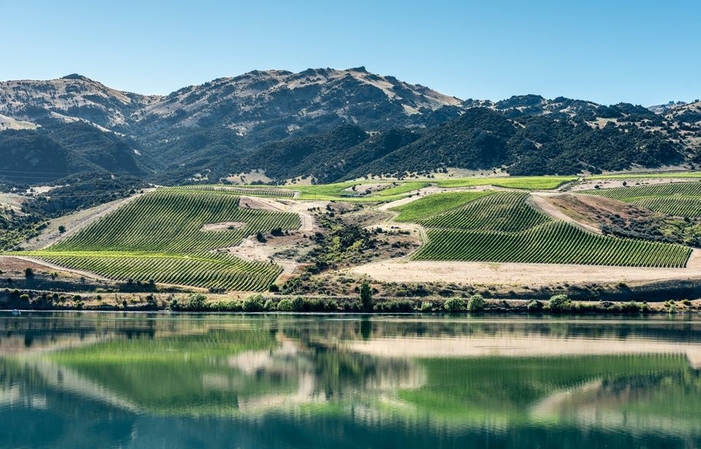
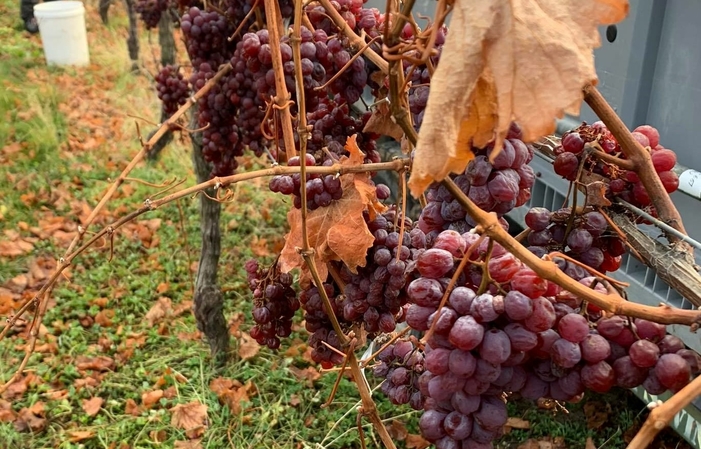
Our sunny terraces facing northwest offer us one of the hottest sites in the area with slopes and ravines offering excellent fresh air drainage minimizing any risk of frost.
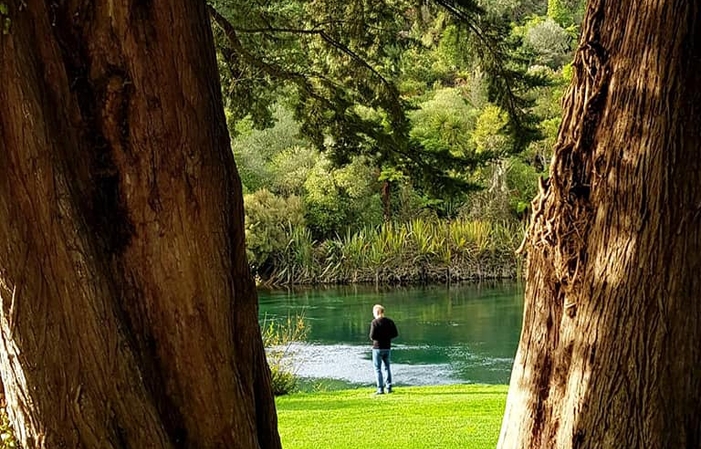
Stretching from 210 to 350 meters above sea level, the plantations are mainly spread over three levels of gently sloping terraces with a single steep face (the "ski slope") where the rows descend dramatically to the lowest terrace just above Lake Dunstan.
The diversity of the soils, the different levels and meso-climates, the different orientations of the rows, as well as the range of clones planted, allow a complexity of the wines that few vineyards can match. Our land is also located in a zoned protection area due to the features of the "exceptional landscape", including shale outcrops, steep escarpments, and ravines filled with native manuka and wild grasses.
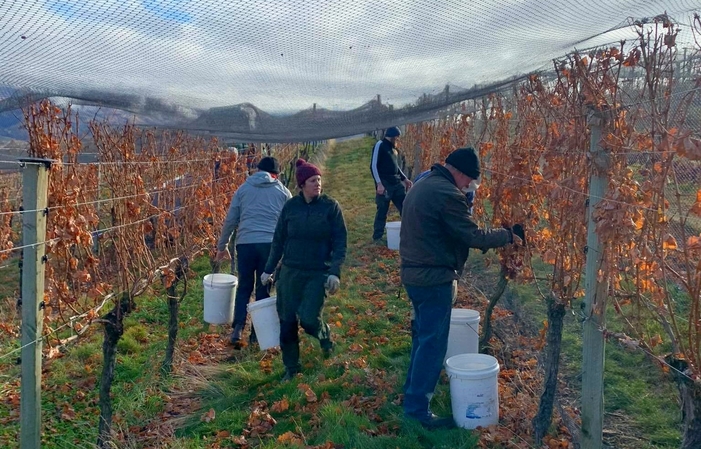
Our first priority with the vineyard is careful management of this spectacular land. The vineyard is cultivated according to the strict regime of sustainable farming practices and we ensure that the health of the vine is never compromised.
We would be
delighted to welcome you to make you discover the estate and its history and the work done to develop our wines!
We look forward to seeing you again at Misha's Estate
Rules and conditions
The visits at 1€ mean that they are carried out free of charge by the winemaker. This amount is requested to ensure the seriousness of your request and avoid the winemaker to block a visiting slot unnecessarily.
In case of unforeseen events, we thank you for cancelling your visit to the platform and/ or notifying the winegrower directly.
Reservation policy
Cancellation policy: : Strict
Products offered for tasting:

mishas vineyard Professional seller
Winemaking in Central Otago The first winemaker attracted to Central Otago was John Desiré Feraud who came to the area during the Dunstan Gold Rush in 1862, and after investing in a concession became... See more
Winemaking in Central Otago The first winemaker attracted to Central Otago was John Desiré Feraud who came to the area during the Dunstan Gold Rush in 1862, and after investing in a concession became rich overnight. Feraud, who came from a French wine family, recognized the potential of viticulture and rented 40 hectares to Clyde where he planted the first wine grapes in 1864. Over the next 20 years he made a variety of wines, even winning an award for his Burgundian-style wine in Sydney in 1881. His farm, named Monte Christo Gardens, was a vast garden of fruit trees, vegetables and 1200 vines, as well as a cellar that still exists today. During this period, winemaker Romeo Bragato also visited Central Otago and declared the area as one of the great potentials for viticulture. However, Feraud and Bragato's enthusiasm for viticulture did not spread to others and when Feraud left the region, commercial winemaking ceased. Over the next hundred years, no one tried to grow the vine again, and Central Otago focused on sheep farming and fruit production. It was not until the late 1970s/early 1980s that the grapes were planted again with the first commercial wines produced again in 1987. It has therefore been a little more than 20 years since the riches of the terroir were rediscovered. References: Oram, Rick. Pioneers of pinot. Auckland: New Holland Publishers (NZ) Ltd, 2004 Cull, Dave. Vineyards on the edge. Dunedin: Longacre Press, 2001 Courtney, Caroline. Wine in New Zealand.Auckland:Random House, 2003 history_pic2La Bendigo subregion Bendigo, the central region of Otago where Misha's Vineyard is located, is also the name of one of the most important sheep stations in the region. Before Bendigo became known for growing grapes, he was best known for producing some of New Zealand's finest wools from the superfine merino sheep that roam the resort's beautiful landscape. Bendigo Station originated when Morven Hills Station – a vast expanse of land stretching from the top of Lindis Pass to the Kawarau River in the south – was divided into smaller farms in 1910. The name comes from the town of Bendigo in the Victorian gold fields in Australia, from where many miners came in their quest for gold. Bendigo was at the centre of the gold rush of the late 1860s, as it was the site of New Zealand's richest quartz reef gold strike. In fact, bendigo township was built virtually overnight from shale rock and earth to serve the gold fields, and ancient streams, locks, shafts, tunnels and tailings can still be found scattered throughout the resort. After the frenzy of activity, people and wealth, generated by the gold rush over a period of about 20 years, pastoral activities have returned to the forefront in Bendigo. history_pic3Ce was only in 1998 that the first vineyard was planted on the Bendigo resort - aptly named Quartz Reef - and since then many vineyards have been established there. The shale and calcareous soils, combined with the warm slopes of the north and northwest, offer an ideal location for growing vines. These vineyards have transformed areas once infested with rabbits into one of the main sub-regions for pinot noir. Bendigo fruit is highly sought after and many vineyards have won gold medals for their wines. Bendigo Station covers approximately 11,000 hectares (30,000 acres) and rises from 195 meters to 1680 meters above sea level. In addition to extensive viticulture, Bendigo still has extensive pastures for its beautiful merino sheep, historic reserves to preserve the remains of gold mining, picturesque public walk-ins, lakeside recreation areas, and vast areas now designated as national parks. See less
 Languages
French
Languages
French
- ID Card:
- Email:
- Already rent: